Tombstone Citations: A 90-Day Dead-Link Dig Through Defunct US Newspapers
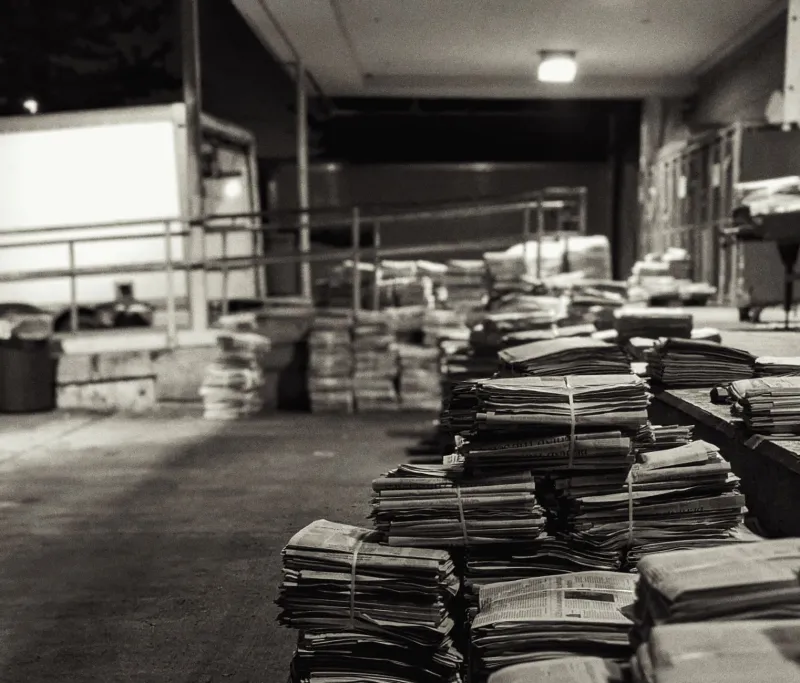
Local newspapers do not die quietly. They leave a strange estate: domain names that still resolve, archive pages that still load, and outbound links to businesses that closed a decade ago. In 2026, that estate looks less like an SEO goldmine and more like a yard sale for people who like paperwork. We dug through it anyway.
The plan was easy on a whiteboard: find defunct US newspaper sites, locate broken outbound links, then pitch replacements to the surviving pages that still had authority and crawl access. We called it the cemetery heist. The less romantic name is dead-link reclamation.
We started with 200 candidate links across small-town papers, county weeklies, and a few city alt-weeklies that had folded into parked domains. Fourteen survived our keep test. Here is the receipt, including the part where most of the “opportunity” turned out to be orphaned junk.
The Pitch Was Not “Buy a Link.” It Was “Fix a Mistake.”
Dead-link reclamation has a clean story. You are not asking a publisher to add a commercial link. You are telling them a page has a broken citation and offering a relevant replacement. That story works in theory. In practice, the publisher is often gone, the page is a CMS ghost, and the person who answers the email is a domain broker in another time zone.
We treated every candidate like a link purchase with extra steps. We checked whether the page was live, whether it was indexed, whether the host domain had real referring domains, and whether anyone could actually edit the page. That last one killed more candidates than any quality metric.
Four Filters That Killed 186 Candidates
Filter 1: The page has to be alive, not just the domain
A surprising number of “defunct newspaper” domains still resolve. That does not mean the article does. We found pages returning 200 status codes but loading a default WordPress theme, a parked-page template, or a casino redirect wrapped in a broken mobile menu. If the page had no usable content around the link, we dropped it. A broken link on a dead page is not a reclamation opportunity. It is a dead link on a dead page.
Filter 2: Authority has to survive the funeral
We pulled referring-domain counts and checked whether the page had any organic landing pages left. Some newspaper domains kept a handful of strong links from local government sites and chambers of commerce, but the specific article page had been orphaned for years. No internal links. No sitemap entry. No crawl path. That is not authority. That is a URL with a pulse.
Filter 3: The replacement has to belong in the sentence
This is where a lot of link vendors get sloppy. They see “broken link” and pitch any URL that fits the topic at the broadest possible level. We required a replacement that made sense in the original paragraph. If the dead link pointed to a local HVAC company in a story about winter heating costs, we looked for a relevant resource, not a generic national SEO page. That filter cut our candidate pool fast and kept the outreach from reading like spam.
Filter 4: Somebody has to own the page
This was the brutal one. Many of these newspaper sites are now maintained by nobody, or by an owner who inherited a domain portfolio and has no interest in editing old articles. We sent 94 outreach emails. We got 11 replies. Of those, four asked for payment, three asked us to explain what a backlink was, and four actually made the edit. The rest went into the void. A dead-link opportunity without an owner is just a URL you cannot use.
What the 14 Keepers Actually Did
We kept 14 placements that met all four filters. Nine were crawled and indexed within 21 days. Five sent at least one referral visit during the 90-day window. Two pages showed a small lift in impressions for the target URL, but no dramatic ranking jump. If your definition of “did anything” is measurable search movement, the real number was closer to two. If your definition is “became a live, crawlable, contextually relevant citation on a formerly authoritative local page,” then 14 is fair.
That gap matters. Dead-link reclamation is often sold as a shortcut to authority. It is closer to archaeology. You are restoring a citation that someone else abandoned. Sometimes the restoration is worth it. Sometimes you are just sweeping a tombstone.
The Real Cost per Reclaimed Link
Our all-in spend was $1,640: $900 for a contract researcher, $400 for crawl and archive tools, and $340 for follow-up outreach help. Across 14 keepers, that is about $117 per link. Across all 200 candidates, it is $8.20 per attempt — which is the number a vendor will put in the pitch deck.
The honest number includes time. We logged 68 hours across research, verification, and outreach. At a $75 hourly rate, the 14 links cost $6,740, or roughly $481 each. That is not a bargain-bin hacklink. That is a small consulting project with a cemetery theme.
Why This Is Not a Hacklink Shortcut
If you are buying backlink packages at scale, dead-link reclamation is a useful safety filter, not a volume play. Ask any vendor selling “dead newspaper links” four questions: Is the page indexed? Does the host still have real referring domains? Is the replacement contextually relevant? Can you prove the edit came from the site owner? If the answer is “we have a network,” walk away.
At HackLink Shop, we are not romantic about link shortcuts. A reclaimed link is only as good as the page it sits on and the person who controls it. The cemetery heist produced 14 keepers and 186 lessons in why “dead link” usually means “dead end.” That is not a failure. That is the filter doing its job.